
Understanding Different Golf Grip Sizes and Their Importance
When it comes to golf, the right grip can significantly influence a player's performance on the course. Golf grip sizes may seem like a minor detail, but selecting the appropriate grip size is crucial for maximizing control, comfort, and consistency in your swing. This article will explore the various golf grip sizes, how to determine the right one for you, and why it matters in your game.
The Basics of Golf Grip Sizes
Golf grips come in different sizes to accommodate the varying hand sizes of players. The primary types of grip sizes include:
1. Standard Golf Grips: This is the most common size, suitable for players with average hand sizes. There is not much industry variance among brands when it comes to a standard size golf grip. A Standard size golf grip is measured at .900" in diameter, 2" down from the butt end (top) of the grip.
2. Midsize Golf Grips: As the name suggests, midsize grips are slightly larger than standard grips. They cater to players with larger hands who need more surface area to grip comfortably. However, this is where sizes can vary between different brands. There's no industry standard that says "midsize means +1/16"'. If a grip is listed as midsize + 1/16", it should measure .960" in diameter, 2" down from the butt end of the grip. But not all midsize grips are + 1/16". For the Karma Grips brand for example, their midsize grips are generally +1/32". Some would consider this on the small side of midsize. However Golf Pride Midsize Grips are all a healthy +1/16" in size.
3. Oversize (or Jumbo) Golf Grips: The terms Jumbo and Oversize are interchangable in the golf industry. These grips are significantly thicker and are ideal for players with very large hands or those who just simply prefer the comfort of a large grip. Oversize grips can also help reduce tension in the hands. Similar to midsize grips though, oversize/jumbo grips can also vary slightly in size among brands. Some companies call a +3/32" grip oversize, however most companies consider +1/8" a true Oversize/Jumbo grip. A +1/8" Jumbo grip should measure 1.02" in diameter, 2" down from the butt cap. Golf Pride Jumbo grips are a good example of a +1/8" grip.
BUT, lets throw one more variable in the mix, JumboMax Grips. They are a horse of a different color! Jumbomax has created a successful company by creating even larger than "regular" Oversize grips. It's true you can purchase a true +1/8" Jumbomax Grip, but Jumbomax makes grips incrementally up to a whopping +3/8", the largest in the industry, and the grip size that Bryson DeChambeau uses. Why would anyone choose to use a grip that large? Best to check out the Jumbomax website and get it from the source. The answer varies from more control, to arthritis, to swing flaw fixes. I will confess that I personally when having a bad hooking stretch switched to a JumboMax XL on my driver and it temporarily fixed the problem till I got my swing back. Whatever works, right?
4. Undersize Grip: Designed for players with smaller hands, undersize grips provide a more comfortable fit and better control for those who feel standard grips are too bulky. Generally across the industry, an undersize grip is -1/16" from standard.
5. Grips With Less Taper: Most golf grips are larger at the butt end (the top) and taper down to a smaller size at the bottom. However, some research suggests that many golfers can benefit from less taper, or less difference in diameter, from the butt end to the bottom of the grip. Grips have "grip tape" underneath them with adhesive to keep them in place. Before grip companies started making grips with less taper, installers would add more tape underneath the bottom half of the grip if the customer wanted less taper in his grips. But today, many grip companies make the grip itself with less taper. They usually will designate that in the name of the grip. Some grip companies just have the words "Less Taper" in the name of some of their grips for instance. Golf Pride uses the term "plus4" in the name of their grips with less taper. This is said to mean that that grip would be eqivalent to a standard grip with 4 added layers of tape added to the bottom half of the grip.
How to Determine the Right Grip Size
Choosing the right grip size involves assessing your hand size and playing style. Here are a couple of methods to help you determine which grip may be best for you:
- Measurement Method: - Use a measuring tape or ruler to measure from the tip of your middle finger to the crease of your wrist. This measurement can give you a rough idea of your hand size.
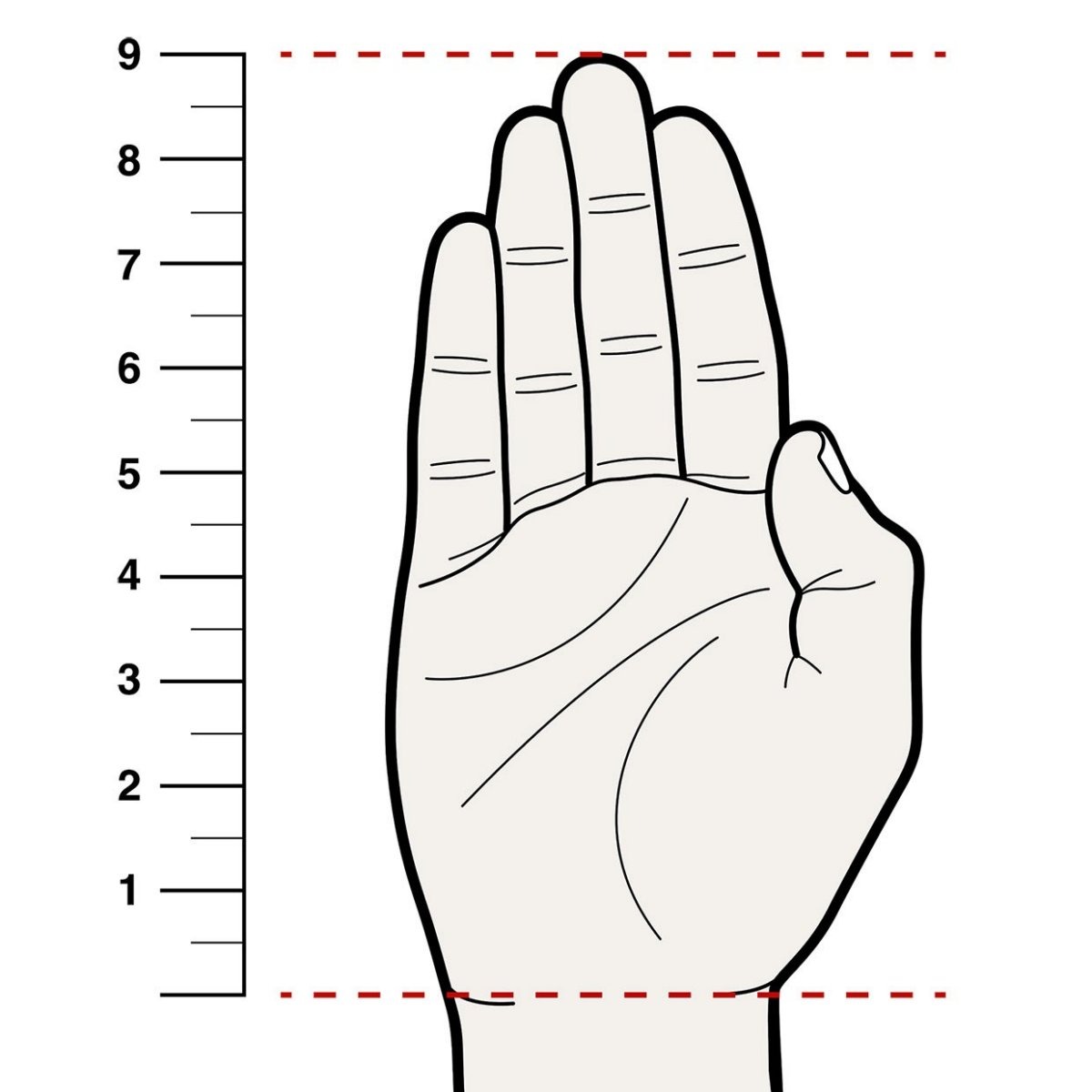
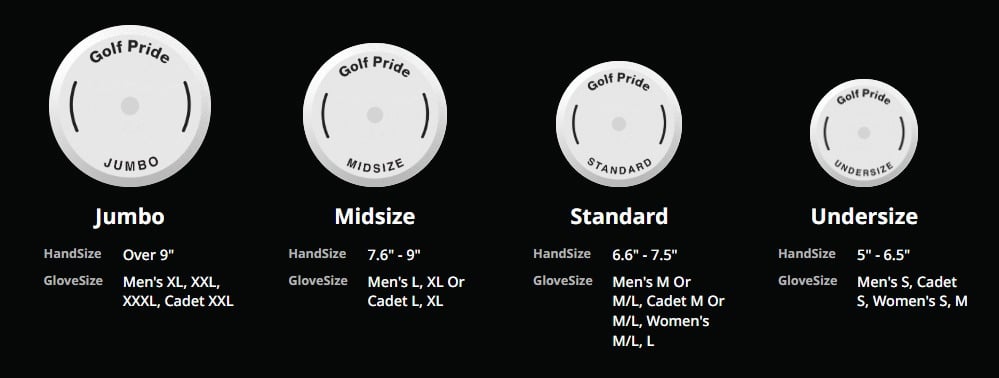
Here are Golf Pride's grip size recommendations based on your measurements using the above method. Again, this is just a guide.
- Finger Test: - Another option to check for your optimal size is to hold a club with your normal grip and observe the placement of your fingers. If your fingers wrap around the grip comfortably without excessive overlap, the grip size is likely appropriate. If you're struggling to grip the club without feeling cramped or if your fingers barely touch, you may need a different size.
Why Golf Grip Size Matters
The grip is your sole connection with the club, making it essential for control over your shots. Here are a few reasons why the correct grip size is important:
1. Control: The right grip size allows for optimal wrist hinge and face control during the swing. A grip that is too small can lead to excessive wrist movement, while one that is too large may restrict movement.
2. Comfort: Comfort is key in golf. An improperly sized grip can lead to fatigue and discomfort, particularly during long rounds. This discomfort can affect performance and lead to poor mechanics.
3. Consistency: Consistent grip pressure contributes to a repeatable swing. Having a grip that fits your hand size helps you maintain a uniform grip pressure, which is crucial for consistent shots.
4. Injury Prevention: Using grips that are not suited for your hand size can lead to tension in the muscles of the hands and forearms, increasing the risk of injuries like golfer’s elbow or tendonitis. Also, a larger grip can give significant relief from arthritis.
Conclusion
Selecting the right golf grip size is an essential component of developing a solid and effective swing. Players should take the time to assess their hand size and comfort level to find the grip that best suits their game. Whether you are a beginner or a seasoned player, understanding the importance of grip size can help you make informed decisions that enhance your performance on the course. Remember, every detail counts in the pursuit of a better game, and the right grip is a fundamental starting point.